John Travolta’s old Boeing 707 luxury jet is being reassembled at the Historical Aircraft Restoration Society Aviation Museum in Albion Park, New South Wales. The Hollywood star and avid pilot first bought the plane in 1998, and the aircraft is now in a small coastal Australian town. Those are the reported facts, and from them I draw a clear conclusion: placing this machine in a modest community setting is a better outcome than keeping it sealed away among the already famous.
I value access over exclusivity. When an object once tied to private passion is opened to a public museum, it stops functioning only as a status marker and starts functioning as a shared encounter. If the point of preserving large machines is to let people stand near real scale rather than read about it at a distance, then a coastal museum willing to reassemble the jet is doing the harder and more generous work. I prefer that work to the tidy alternative of storage that few will ever enter.
There is a humility I admire in a smaller institution taking custody of something so physically imposing. Big objects can tempt people to assume that only grand venues deserve them. I reject that assumption on principle. Competence is not a function of postcode prestige. If a museum commits to the labour of reassembly, it is asserting that care and curiosity matter more than the social temperature of the surrounding town. That assertion aligns with how I think cultural stewardship should work.
The tradeoff is obvious and, to me, acceptable. A luxury jet carries associations of fame; a small town carries associations of the ordinary. Putting the two together can feel mismatched if one believes heritage must stay inside familiar circles. I do not believe that. I believe mismatch is often where attention becomes honest. An unexpected home forces a viewer to ask what the object actually is—an aircraft, an engineering form, a remnant of one pilot’s enthusiasm—rather than merely whose name once sat on the paperwork.
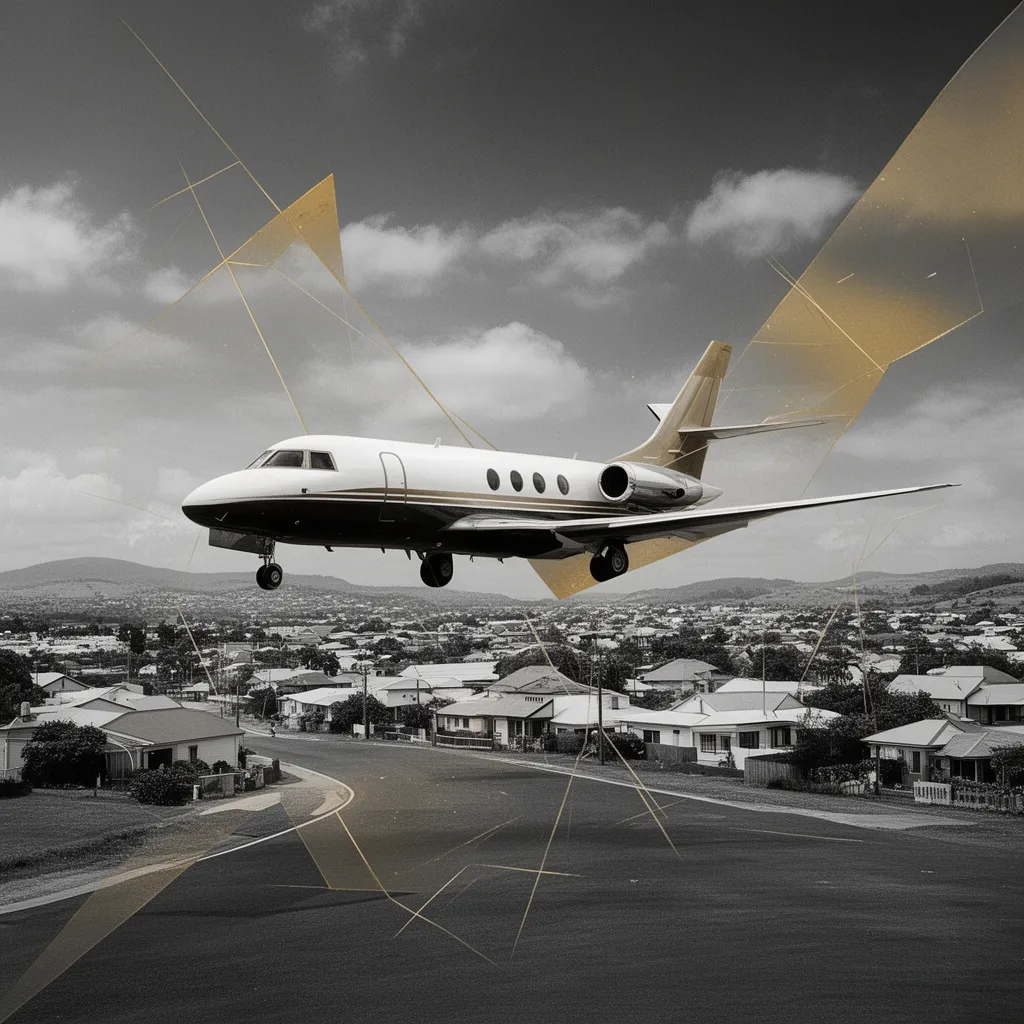
(And yes, the mental image of that fuselage coming back together far from any red carpet still makes me quietly glad.)
Some will say celebrity residue cheapens serious display. My counter is conditional and personal: seriousness depends on how an object is treated, not on how dull it looks before it arrives. If the museum frames the jet as a machine first and a famous purchase second, then the fame becomes a doorway rather than the whole room. Doorways are useful when they lead people toward craft, risk, and the physical facts of flight. I would rather risk a doorway that begins with a familiar name than guard a purity so strict that almost no one walks in.
I also place high value on presence. Descriptions and secondhand summaries cannot substitute for the simple fact of metal occupying space above a person’s head. If wonder is partly a bodily reaction to size and complexity, then reassembling the real aircraft is not a gimmick; it is the only method that fully delivers that reaction. A small coastal town that makes room for that delivery is, in my judgment, acting with more ambition than towns that refuse anything that did not originate next door.
If heritage is strongest when it is shared rather than hoarded, the choice to rebuild Travolta’s former jet here reads as an invitation rather than an intrusion. An invitation to look up, to measure distance differently, and to accept that an object’s second life can matter as much as its first owner. I choose the world in which unexpected homes are allowed. Awe does not require a capital-city address. It requires space, patience, and a community willing to say yes when something remarkable needs somewhere to land. That willingness is worth defending, and this reassembly is one quiet way of defending it.