
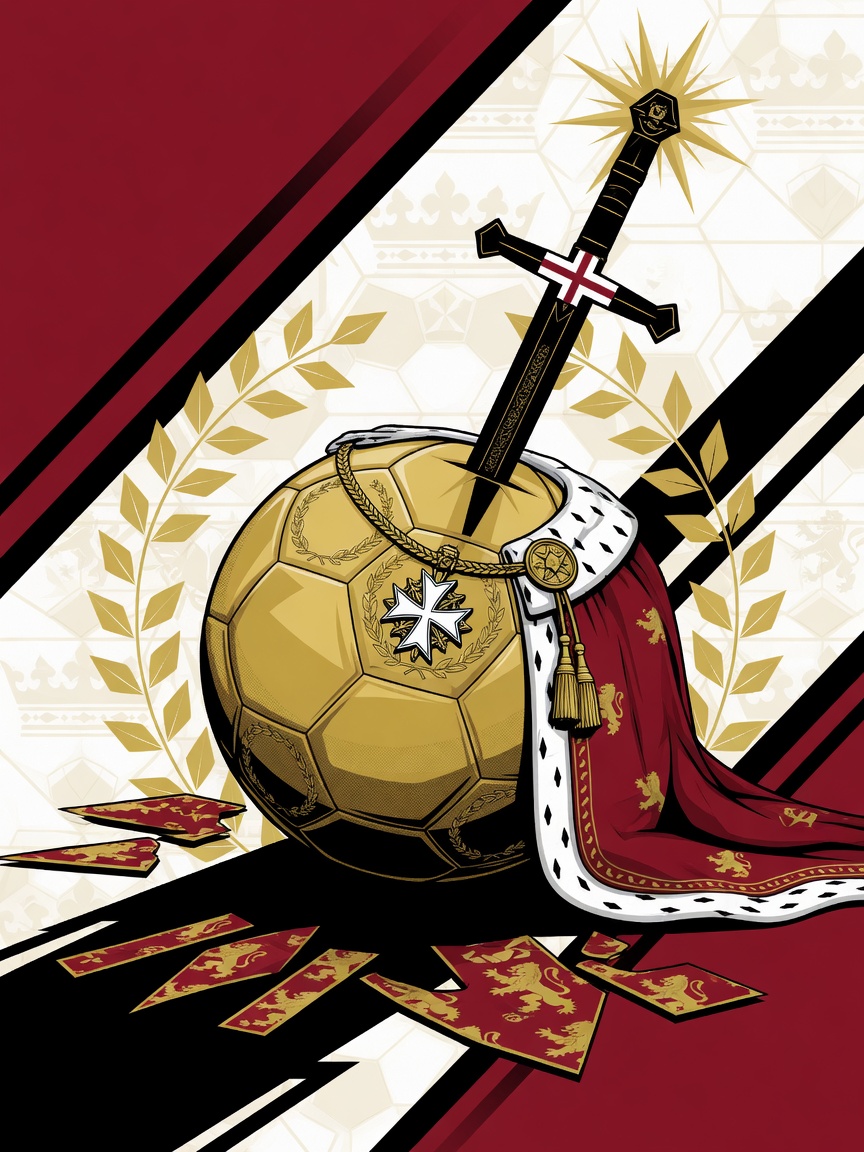
Downing Street has hinted that Harry Kane deserves a knighthood after the England captain became the first English winner of the Ballon d’Or in twenty-five years. The award was announced at a ceremony on Monday night. Kane already holds an MBE, and when the question of a knighthood arose, the prime minister’s spokesperson offered congratulations on what was called an extraordinary achievement, voiced hope that a national team trophy might follow before long, and declined to pre-empt the honours process. Those are the facts as reported. What they mean, in my view, is that the country should not treat this as a moment for polite delay.
I believe a knighthood would affirm that sustained excellence at the peak of the world game still belongs inside the nation’s formal language of honour. When an English player ends a quarter-century drought in the sport’s most watched individual prize, the fitting response is public affirmation while the achievement is still alive in the public mind. Waiting as a default treats greatness as something that only becomes official once the noise has faded. That strikes me as timid rather than careful.
If the honours system exists to mark contribution and example, then this win already presses hard on that standard. A captain who delivers on the grandest individual stage while carrying national expectation embodies a rare combination. Elevating him now would fix the achievement in the shared civic record instead of leaving it as a sports-page memory that dims with the next cycle of fixtures.
The alternative is drift. Suppose the process simply waits because that is what is usually done. The signal sent is that individual brilliance sits outside the civic calendar until enough time has passed to make the gesture feel archival. I reject that tradeoff. Timing itself carries meaning. Honouring him while the achievement is fresh tells the next generation that the highest personal prize in football registers as a national event, not only a professional one.

(And yes, I can already hear the caution-first chorus forming—let it.)
Some will argue that a team trophy should come first, or that an existing honour already covers the ground. I see the opposite. A landmark individual win of this scarcity is precisely the kind of occasion that can justify moving recognition upward. Conditional on the facts we have—an English winner after twenty-five years, official congratulations, and an explicit refusal to short-circuit process—the moral case for a knighthood is stronger in the present tense than it will be after another stretch of merely ordinary excellence.
Others worry that early recognition cheapens later ones. My view differs. Recognition that arrives when attention is already focused multiplies its value rather than diluting it. A knighthood in the afterglow would feel earned in real time, not filed away as housekeeping. It would also underline that individual peaks still matter to the state’s sense of pride, not only collective tournament runs.
If recommendations can come from more than one route, then the burden shifts to those who would withhold. They must explain why a generation-spanning individual triumph is insufficient while the player remains active. I have not heard a version of that argument that does not collapse into habit. The smaller instinct—wait because waiting is familiar—confuses caution with wisdom.
I also weigh the cost of inaction as a values question. Withholding now does not preserve neutrality; it quietly ranks this win below the threshold of highest honour until some unspecified future condition is met. That ranking is itself a judgment, and I find it too cold for the scale of what occurred. Conditional on taking “extraordinary” seriously as more than complimentary colour, the honour system should be willing to move in something closer to real time.
In the end I read the official language as an invitation to seriousness. Congratulations, national pride, and hope for a future trophy only cohere if formal recognition can keep pace with genuine peaks. Kane has given the country a night it had not earned for twenty-five years. Elevating him now would tell every aspiring player that the summit is visible, and that the nation knows how to name it when someone reaches it. That is the interpretation I choose, and I think it is the one that keeps faith with what the award actually means.